
TECHNOLOGY TRANSFER & COMMERCIALISATION
Turning Intellectual Property into Commercial Value.
We advise on the transfer, licensing and commercialisation of intellectual property, structuring agreements that safeguard ownership, mitigate risk and maximise commercial value.
THE STRATEGIC PERSPECTIVE
Strategic Technology Transfer
Successful commercialisation begins with clear ownership, defined rights and sound commercial terms.
We structure technology transfer and licensing arrangements that protect intellectual property, define contractual obligations and maximise commercial value.
OUR ADVISORY SCOPE
Structuring Innovation for Commercial Value
We structure IP joint ventures and collaborations, defining ownership, responsibilities and commercial rights to protect each party’s interests.
01
TECHNOLOGY TRANSFER AGREEMENTS
Structuring agreements for the transfer of technology, technical know-how and associated IP rights.
02
IP LICENSING ARRANGEMENTS
Defining licensing rights, permitted use, territorial scope, exclusivity and royalties.
03
KNOW-HOW & TRADE SECRET TRANSFER
Safeguarding confidential technical information and proprietary know-how during transfer.
04
RESEARCH & DEVELOPMENT COLLABORATIONS
Structuring collaborative innovation agreements covering IP ownership, development and exploitation.
05
COMMERCIALISATION STRUCTURES
Establishing frameworks for technology exploitation, revenue-sharing and commercial partnerships.
06
OWNERSHIP & RIGHTS ALLOCATION
Defining IP ownership, retained rights, sublicensing and usage restrictions.
Clear ownership, defined rights and contractual certainty underpin effective technology commercialisation.
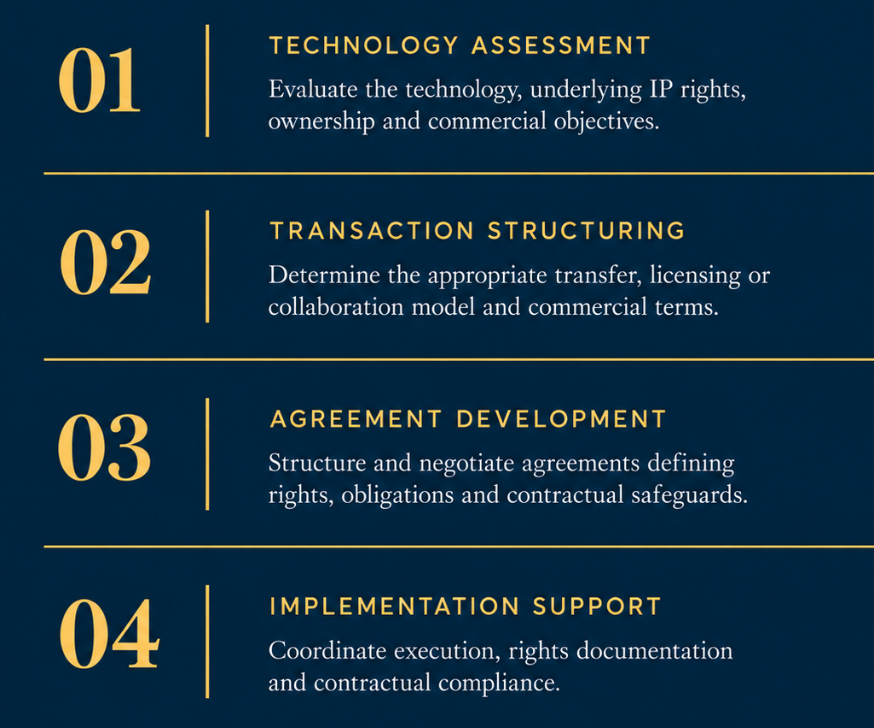
OUR APPROACH
From Technology to Commercial Application
A structured approach to technology transfer, protecting intellectual property and securing commercial interests.
From technology assessment to implementation, every stage is structured to protect IP rights and secure commercial value.
CONTRACTUAL SAFEGUARDS
Protection Beyond the Transaction
Effective technology commercialisation depends on clearly defined rights, obligations and safeguards.
01
OWNERSHIP & CONTROL
Define IP ownership, retained rights, permitted use and transfer restrictions.
02
CONFIDENTIALITY & KNOW-HOW
Safeguard trade secrets, technical information and proprietary knowledge.
03
COMMERCIAL RIGHTS & RETURNS
Structure royalties, payment obligations, exclusivity and commercial restrictions.
04
TERMINATION & CONTINUITY
Establish termination rights, post-termination obligations and continued IP use.
Safeguarding ownership, proprietary knowledge and commercial interests throughout the technology transfer lifecycle.
ENFORCEMENT ASSESSMENT
Understand the Risk. Define the Response.
Every infringement presents different risks and commercial implications. We assess the strength of IP rights, the nature of the infringement and the available enforcement options to establish a clear course of action.
Assess the rights. Understand the exposure. Define the response.
01 RIGHTS ASSESSMENT
Evaluate the scope, validity and enforceability of the intellectual property rights involved.
02 INFRINGEMENT ANALYSIS
Examine the suspected infringement, available evidence and potential exposure.
03 COMMERCIAL IMPACT
Assess business risks, market implications and the potential consequences of enforcement.
04 ENFORCEMENT OPTIONS
Identify proportionate responses based on legal considerations, commercial priorities and desired outcomes.
PROTECTING COLLABORATIVE VALUE
Protecting IP Interests Across Partnerships
IP joint ventures create commercial opportunities but carry ownership and misuse risks. Clear contractual safeguards protect intellectual property and preserve commercial flexibility.
Collaboration Creates Opportunity. Defined Rights Protect Its Value.
Frequently Asked, Clearly Answered
01. What is technology transfer?
Technology transfer involves transferring or licensing technology, technical know-how and associated intellectual property rights for commercial or operational use.
02. What is the difference between technology transfer and IP licensing?
Technology transfer may involve technology, know-how and related rights, while IP licensing grants defined rights to use intellectual property without transferring ownership.
03. Can technology be commercialised without transferring IP ownership?
Yes. Licensing, royalties and commercial partnerships enable technology owners to generate revenue while retaining ownership of their intellectual property.
04. What should a technology transfer agreement include?uted without transferring ownership?
Key provisions typically address IP ownership, permitted use, territorial rights, confidentiality, royalties, liability and termination.
05. How are trade secrets protected during technology transfer?
Through confidentiality agreements, restricted access, permitted-use provisions and safeguards against unauthorised disclosure or exploitation.
06. Who owns intellectual property developed through a technology collaboration?
Ownership depends on applicable law and contractual terms. Agreements should distinguish pre-existing IP from newly developed rights and define their ownership and use.
07. Can technology transfer agreements operate internationally?
Yes. Cross-border agreements can establish territorial rights, licensing conditions and commercial obligations, subject to applicable laws and regulatory requirements.
08. How does IPWise support technology commercialisation?
IPWise advises on technology transfer agreements, IP licensing, ownership structures, commercial terms and contractual safeguards to protect intellectual property and support commercial exploitation.
Commercialise Innovation with Confidence.
Structure technology transfer and IP licensing arrangements that protect proprietary rights, manage risk and maximise commercial value.