
Trademark Licensing Services
Commercialise your trademark without transferring ownership
We structure and negotiate trademark licences that protect ownership, preserve brand value and support commercial growth across jurisdictions
WHAT IS TRADEMARK LICENSING?
Trademark licensing turns brand rights into commercial opportunity
A trademark licence allows a brand owner to authorise another party to use its trademark under defined commercial terms while retaining ownership. Properly structured licensing arrangements protect brand reputation, maintain quality standards and create new commercial opportunities without compromising long-term control.
Maintain Trademark Ownership
Retain full ownership of your trademark while granting carefully defined rights to another party.
Generate Commercial Revenue
Create new income streams through royalty arrangements and strategic licensing partnerships.
Expand Into New Markets
Enable trusted partners to use your trademark across new territories, industries or distribution channels.
Protect Brand Integrity
Control how your trademark is used through quality standards, usage guidelines and contractual obligations.
When Trademark Licensing Becomes the Right Commercial Strategy
Trademark licensing supports a wide range of commercial objectives. Whether expanding into new markets, collaborating with manufacturers or establishing franchise operations, a carefully structured licence enables businesses to grow while retaining ownership of their trademark.

International Expansion
License your trademark to trusted partners in new jurisdictions without transferring ownership.
Distribution Agreements
Authorise distributors to market products under your trademark while maintaining control over the brand.
Franchising
Grant franchisees the right to operate under your trademark through structured licensing arrangements.
Manufacturing Partnerships
Permit third-party manufacturers to produce branded goods under defined quality standards.
Brand Collaborations
Enable strategic co-branding and promotional partnerships through clearly defined licence agreements.
Group Company Licensing
Allow affiliated companies within a corporate group to use trademarks consistently across jurisdictions.
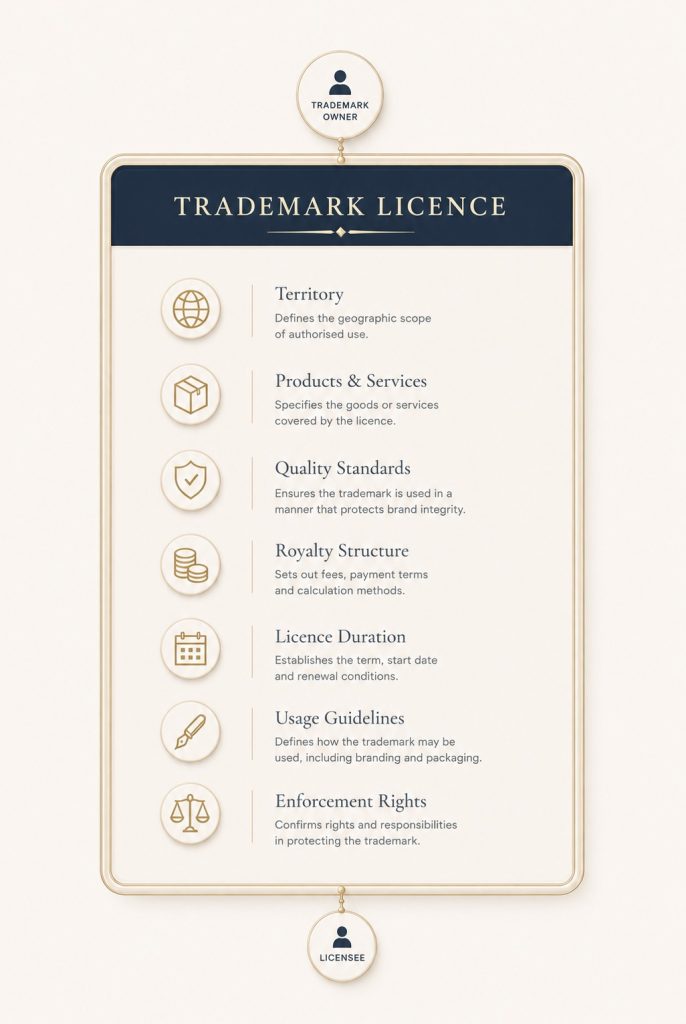
What Every Trademark Licence Should Include
A trademark licence does more than authorise use of a brand. It defines the commercial boundaries of the relationship — how, where and under what conditions the trademark may be used, how brand standards are maintained and how the owner’s rights and long-term brand value are protected.
Our Trademark Licensing Process
Our licensing process is designed around the commercial relationship behind the agreement — defining the rights being granted, protecting the brand and establishing a clear framework for long-term use of the trademark.
Managing Trademark Licences Beyond Execution
Maintaining Brand Standards
Monitoring Licence Compliance
Responding to Commercial Change
Renewal, Amendment & Exit
Managing Trademark Licensing Across Jurisdictions
Trademark licensing across multiple jurisdictions requires careful coordination. Local laws, recordal requirements and trademark office practices can differ from one market to another, even where the underlying commercial arrangement remains the same.
We help businesses structure and coordinate trademark licensing arrangements across jurisdictions, ensuring that each licence remains aligned with the relevant trademark rights, local requirements and wider commercial strategy.

Local Requirements
Navigate the local rules and practices that shape each licensing arrangeme
Licence Recordal
Coordinate licence recordals and supporting documentation where required.
Consistent Commercial Framework
Maintain commercial consistency while accommodating local requirements.
Cross-Border Portfolio Coordination
Keep licensing arrangements aligned across markets and the wider trademark portfolio.
Why Businesses Choose IPWise for Trademark Licensing
Commercially Focused Advice
Licensing strategies aligned with your commercial objectives, market position and wider brand strategy.
Growth-Oriented Licensing
Ongoing Portfolio Support
Managing amendments, renewals and evolving licensing requirements as commercial relationships develop.
Tailored Licensing Structures
Agreements structured around the rights, territories, products and commercial relationships that matter to your business.
Multi-Jurisdiction Coordination
Long-Term Brand Perspective
Frequently Asked, Clearly Answered
What is a trademark licence?
A trademark licence allows the trademark owner to authorise another party to use the trademark under agreed conditions while retaining ownership. The licence can define where, how and for what products or services the trademark may be used.
Does licensing a trademark transfer ownership?
No. A trademark licence permits another party to use the trademark but does not transfer ownership. The trademark owner continues to own the mark, subject to the rights granted to the licensee under the licence agreement.
What should a trademark licence agreement include?
A trademark licence agreement should clearly define the licensed trademarks, permitted use, territory, products or services, duration, quality standards, financial terms, enforcement responsibilities, termination rights and other conditions relevant to the commercial relationship.
Can a trademark licence be exclusive or non-exclusive?
Yes. A trademark licence may be exclusive, sole or non-exclusive depending on the commercial arrangement. The appropriate structure will depend on the rights the trademark owner intends to retain and the level of exclusivity being granted to the licensee.
Can trademark licensing generate royalty income?
Yes. Trademark owners can structure licences to generate revenue through royalties, fixed licence fees or other agreed commercial arrangements. The appropriate model will depend on the nature of the brand, market and licensing relationship.
Does a trademark licence need to be recorded with the trademark office?
This depends on the jurisdiction. Some countries require or recommend recordal of a trademark licence, while others do not. Local requirements should therefore be considered wherever the licensed trademark is registered or used.
Can one trademark licence cover multiple countries?
Yes, a licence can be structured to cover multiple territories. However, local trademark laws, recordal requirements and regulatory considerations may differ between jurisdictions and should be addressed as part of the licensing strategy.
How can a trademark owner maintain control over licensed use?
A carefully structured licence can establish quality standards, usage guidelines, approval procedures, monitoring rights and other controls designed to ensure that use by the licensee remains consistent with the owner’s brand standards and commercial expectations.
Can a trademark licence be amended or terminated?
Yes. A licence agreement can establish procedures for amendment, renewal and termination. It should also address what happens when the relationship ends, including cessation of trademark use, outstanding payments and other continuing obligations.
Turn Your Trademark Into a Commercial Asset
Whether you are entering your first licensing arrangement, expanding an established programme or coordinating licences across multiple markets, we help structure the commercial and trademark framework needed to protect your brand and support long-term growth.