
ASSESS BEFORE YOU PROTECT
Strategic Design Assessment
Not every design feature carries the same value. We assess what makes a design distinctive, where protection may lie and how it should be positioned before filing.
BEFORE FILING
Protection Starts With Understanding the Design
Clarity of design. Precision in protection.
A design application should begin with a clear understanding of what gives the design its identity and what deserves protection.
Strategic assessment isolates the features that matter, considers the design landscape and defines a more deliberate path to protection.
WHAT WE ASSESS
Looking at the Design From Every Angle
Protection depends on more than the product as a whole. We examine the visual elements that define the design and how they work together.
01
FORM & CONFIGURATION
Define the Shape
The form, contours and configuration that give the design its overall appearance.
02
VISUAL FEATURES
Identify What Distinguishes
Lines, surfaces, patterns, ornamentation and other features that shape its visual identity.
03
DESIGN LANDSCAPE
Understand What Exists
Earlier designs that may influence distinctiveness, scope or filing strategy.
04
PROTECTABLE SCOPE
Define What Matters
The features and combinations that may warrant protection and how broadly they should be positioned.
The assessment is not simply whether a design can be filed. It is what should be protected, and how.
FROM ASSESSMENT TO STRATEGY
Turning Design Insight Into Direction
Assessment should lead to decisions. The findings help define what to protect, how to present it and where protection should begin.
Good assessment does more than identify what is protectable. It determines what is worth protecting.
PROTECTION PRIORITIES
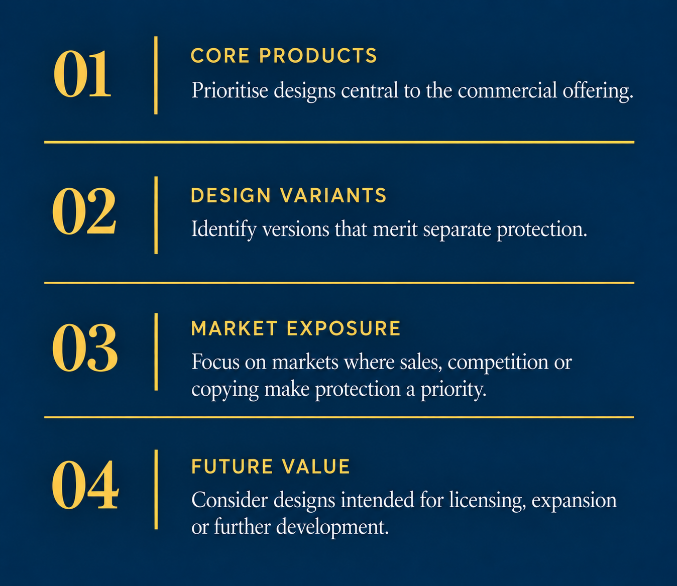
Prioritise What Merits Protection.
Focus protection on designs that define the product, distinguish the brand and carry commercial value.
The strongest protection strategy starts with knowing which designs matter most.
TIMING & DISCLOSURE
Assess Timing Before Disclosure.
What has been disclosed and when can shape the protection available. Assess earlier exposure and planned releases before setting the filing strategy.
REVIEW
Identify when and where the design has been published, exhibited, offered or sold.
PLAN
Review launches, presentations and planned sharing with commercial partners.
ALIGN
Set filing priorities around launch dates and intended markets.
Protection should precede exposure, not follow it.
ASSESSMENT OUTCOME
Define the Next Step.
Turn the assessment into clear priorities: what to protect, what to resolve and how to prepare for filing.
An assessment earns its value through the decisions it makes possible.
01 LICENSING
DESIGNS TO PURSUE
Select the designs and variants that merit protection.
02 COLLABORATION
POINTS TO RESOLVE
Clarify ownership, prior disclosure and features requiring further review.
03 TRANSACTIONS
FILING PRIORITIES
Set the order of action around commercial value, target markets and timing.
04 INVESTMENT
APPLICATION PREPARATION
Identify the images, drawings and information needed to proceed.
Frequently Asked, Clearly Answered
01. What does a strategic design assessment cover?
The design’s visual features, commercial importance, variants, disclosure history and intended markets. The outcome is a clear recommendation on protection priorities and next steps.
02. When should I seek an assessment?
Once the design is sufficiently developed to review, ideally before publication, sale or launch.
03. What information should I provide?
Images or drawings, relevant variants, ownership details, target markets and launch plans, together with any previous disclosure dates.
04. Can a product range be assessed together?
Yes. Reviewing related designs together helps identify which products and variants merit priority.
05. What if the design has already been disclosed?
Provide details of when, where and how it was shared. We assess the implications for protection in the intended markets.
06. Does the assessment include filing?
The assessment defines the recommended approach. Application preparation and filing can be arranged as the next stage.
Give Your Design a Clear Direction.
Establish what merits protection and how to proceed before launch or filing.