
PORTFOLIO OVERSIGHT
Rights Portfolio Management
RIGHTS AT SCALE
Beyond Individual Copyright Assets
As copyright holdings grow, effective management requires a coordinated view across the portfolio
PORTFOLIO COMPONENTS
What Sits Within the Portfolio
01
Copyright Assets
Creative works and registrations forming part of the portfolio.
02
Ownership & Records
03
Licences & Agreements
Records of permissions, licences and commercial arrangements affecting the use of copyright assets.
04
Rights Activity
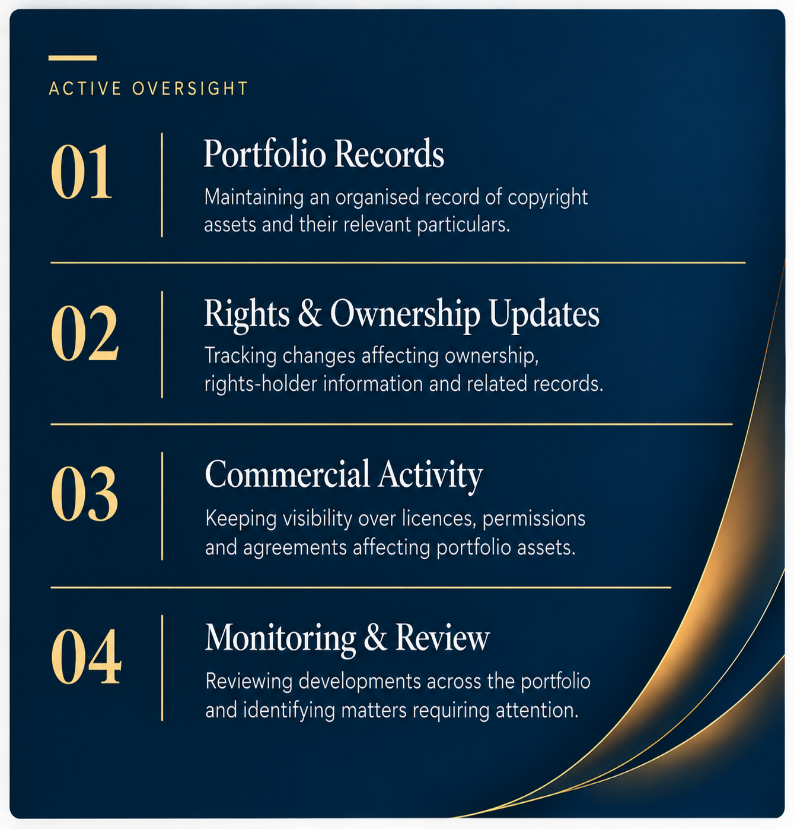
ACTIVE OVERSIGHT
Keeping the Portfolio Current
PORTFOLIO INTELLIGENCE
Turning Copyright Records into Business Insight
n reveal documentation gaps, underused rights, overlapping commercial arrangements and areas requiring attention. Periodic review provides clearer insight into how the portfolio supports current operations and where further action may be appropriate.
01
Portfolio Visibility
Understanding what copyright assets are held and how they sit within the wider portfolio.
02
Rights Gaps
Identifying missing records, unclear ownership positions or other matters requiring attention.
03
Commercial Opportunities
Recognising rights that may support further licensing, exploitation or commercial use
04
Risk & Exposure
Identifying issues that may affect protection, enforcement or commercial transactions.
STRATEGIC REVIEW
Keeping the Portfolio Aligned with the Business
What Has Changed?
New works, business activities and commercial arrangements may alter the portfolio.
What Requires Attention?
What Comes Next?
Portfolio priorities can inform decisions on registration, licensing, commercialisation or enforcement.
Frequently Asked, Clearly Answered
01. What is copyright portfolio management?
Copyright portfolio management is the structured oversight of a collection of copyright assets and the records, ownership information, licences, agreements and other rights activity associated with them.
02. What should be included in a copyright portfolio?
A portfolio may include creative works, copyright registrations, ownership and chain-of-title records, licences, commercial agreements, recordals and information relating to monitoring or enforcement activity.
03. Why should businesses maintain a copyright portfolio?
A structured portfolio provides clearer visibility over the copyright assets a business holds, how those rights are owned and used, and whether particular assets or records require further attention.
04. How often should a copyright portfolio be reviewed?
The appropriate review cycle depends on the size and activity of the portfolio. Review may be particularly relevant when new works are created or acquired, ownership changes, new commercial arrangements are entered into, or significant business activities affect existing rights.
05. Can copyright portfolio management identify gaps in protection or documentation?
Yes. Portfolio review can help identify missing or incomplete records, unclear ownership positions, assets requiring registration or other protection, and commercial arrangements that may require closer review.
06. Can copyright portfolio management support commercialisation and enforcement?
Yes. Clear visibility over the assets, ownership position and relevant commercial rights can support informed decisions concerning licensing, commercial exploitation and enforcement where required.
COPYRIGHTS UNDER MANAGEMENT
Copyright assets are easier to protect, use and develop when the portfolio behind them is clearly understood.